
Blaming the Sick

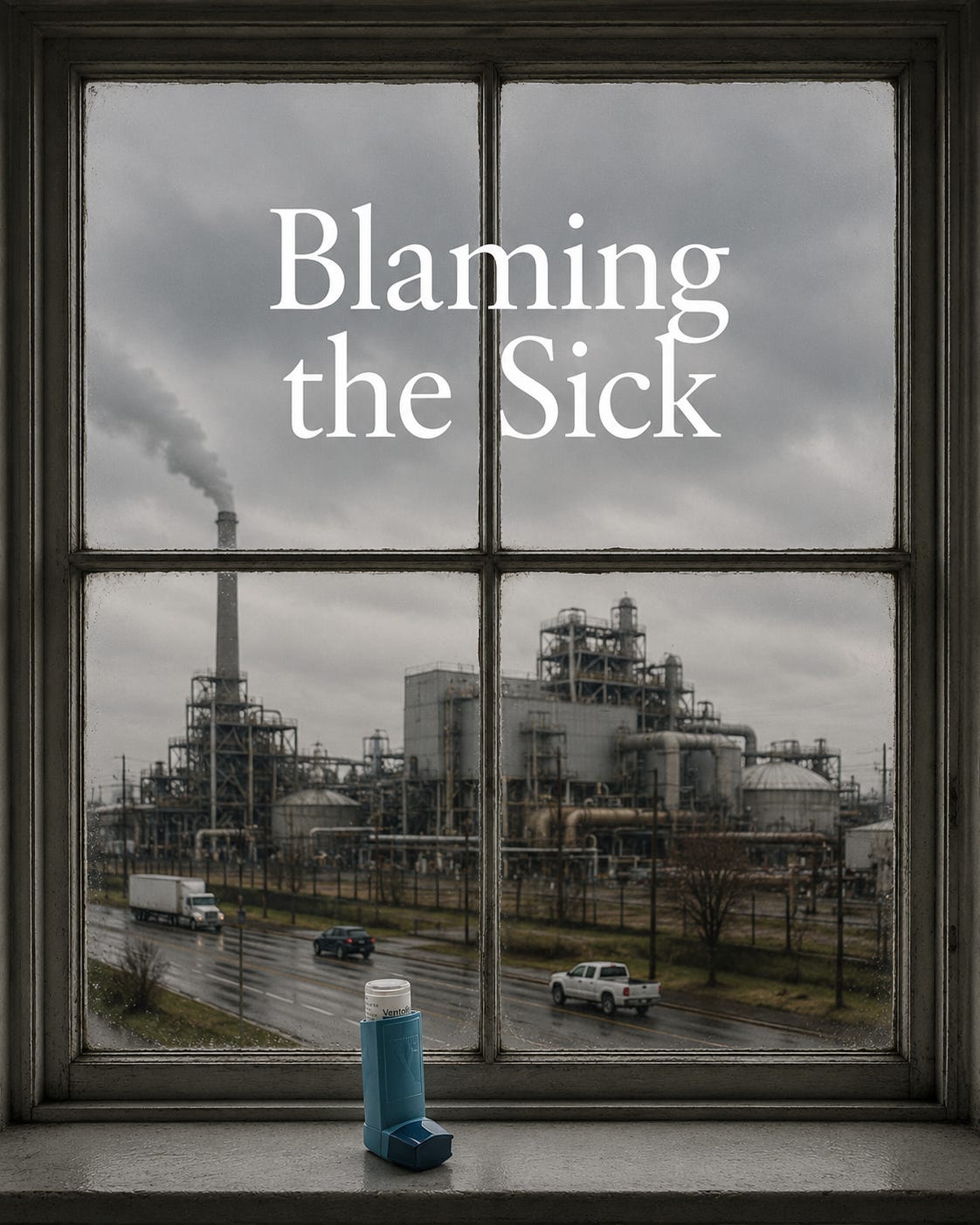
Why do we first search for fault in people, and only later in the conditions we have made around them?
When a child grows obese, diabetic, anxious, or short of breath, why do we ask what was chosen before we ask what was given?
We study appetites but not the food. We measure willpower while the air grows fouled, the water burdened, and the poisons pass quietly from one generation to the next.
We have become skilled at treating illness while leaving many of its causes in place.
And so a harder question remains.
When did we decide that sickness belongs chiefly to the person who bears it?
Perhaps blame has become easier than repair. Easier to ask individuals to overcome conditions that no individual alone can change. Easier to praise resilience than to confront the industries, habits, and conveniences that make resilience necessary.
But what would it ask of us to think differently?
What would it require of our laws, our markets, and our way of living if we stopped assigning fault and began, instead, the patient work of repair?
To me, it’s important to distinguish between things we can control in our environment and those we cannot. We can buy organic produce whenever possible and choose fragrance-free personal care and cleaning products.
I’m gobsmacked by chronically ill people who continue to willfully expose themselves to chemicals in their daily lives. My friend has Parkinson’s Disease and loves using Tide Pods. And won’t give them up. I weep.
I liked, "Easier to praise resilience than to confront the industries, habits, and conveniences that make resilience necessary."