
Forged Underground
How Cornwall's Mines Helped Build the Modern World

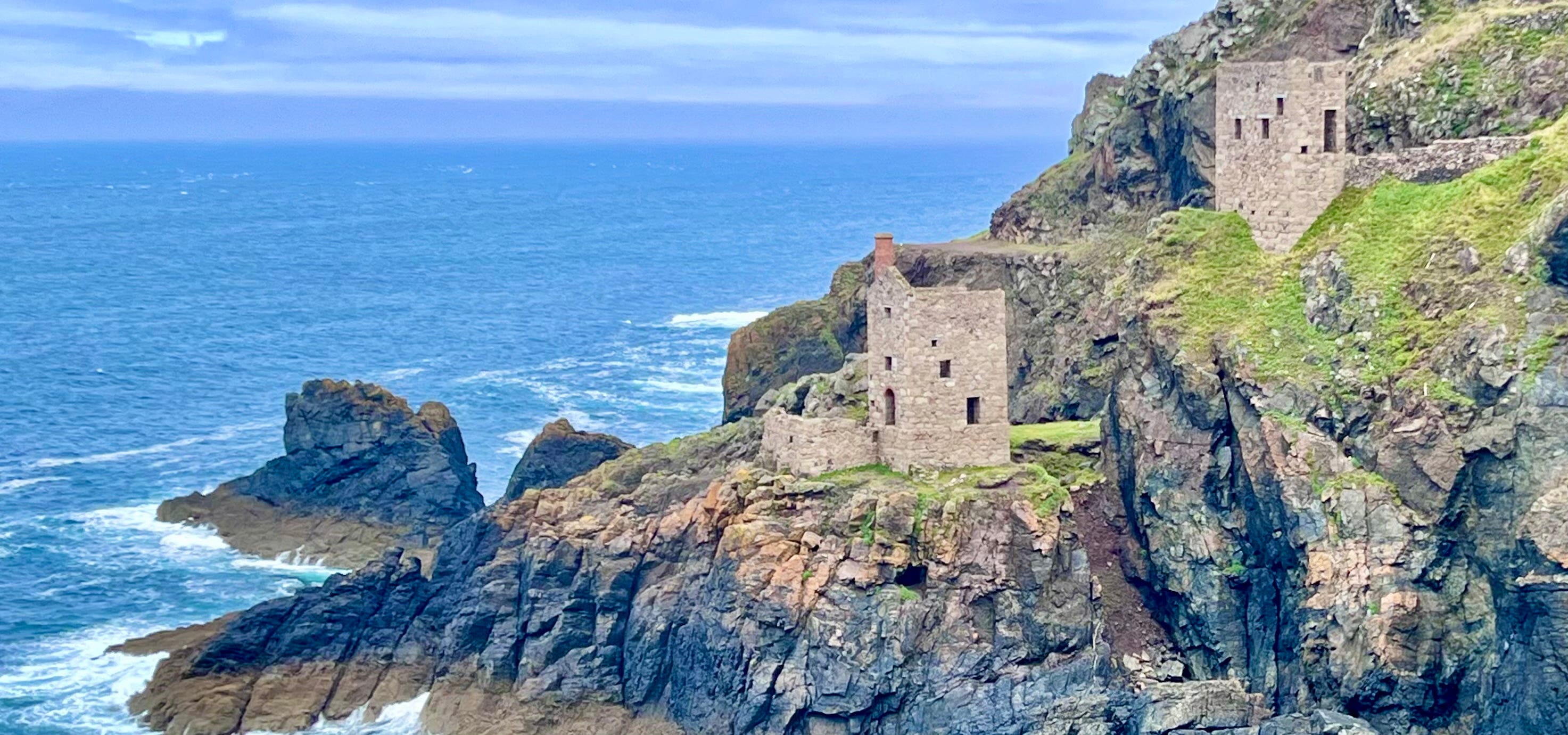
After spending three decades studying lead poisoning and other environmental hazards, I’ve developed a habit that is difficult to shake. Whenever I encounter a technological triumph, I find myself asking a second question: What was the human cost? That question followed me through Cornwall’s old mining districts. Standing before the great pumping engines at Geevor, Trewavas, and Botallack, it was impossible not to admire the ingenuity. These machines solved extraordinary problems and helped power the Industrial Revolution. Yet I also knew that every advance carried risks of its own. The deeper miners ventured underground, the greater their exposure to silica, radon, and other hazards. Before turning to those costs, however, it is worth pausing to appreciate the remarkable engineering achievements that emerged from Cornwall’s mines.
Standing on the cliffs above Cornwall’s abandoned mines, it is easy to focus on what was taken from the earth: tin, copper, arsenic, and other metals that helped build the modern world. But a deeper story lies in what people created to reach them. Scattered across the landscape are the remains of an extraordinary engineering experiment—one that helped transform not only mining, but the modern world itself.
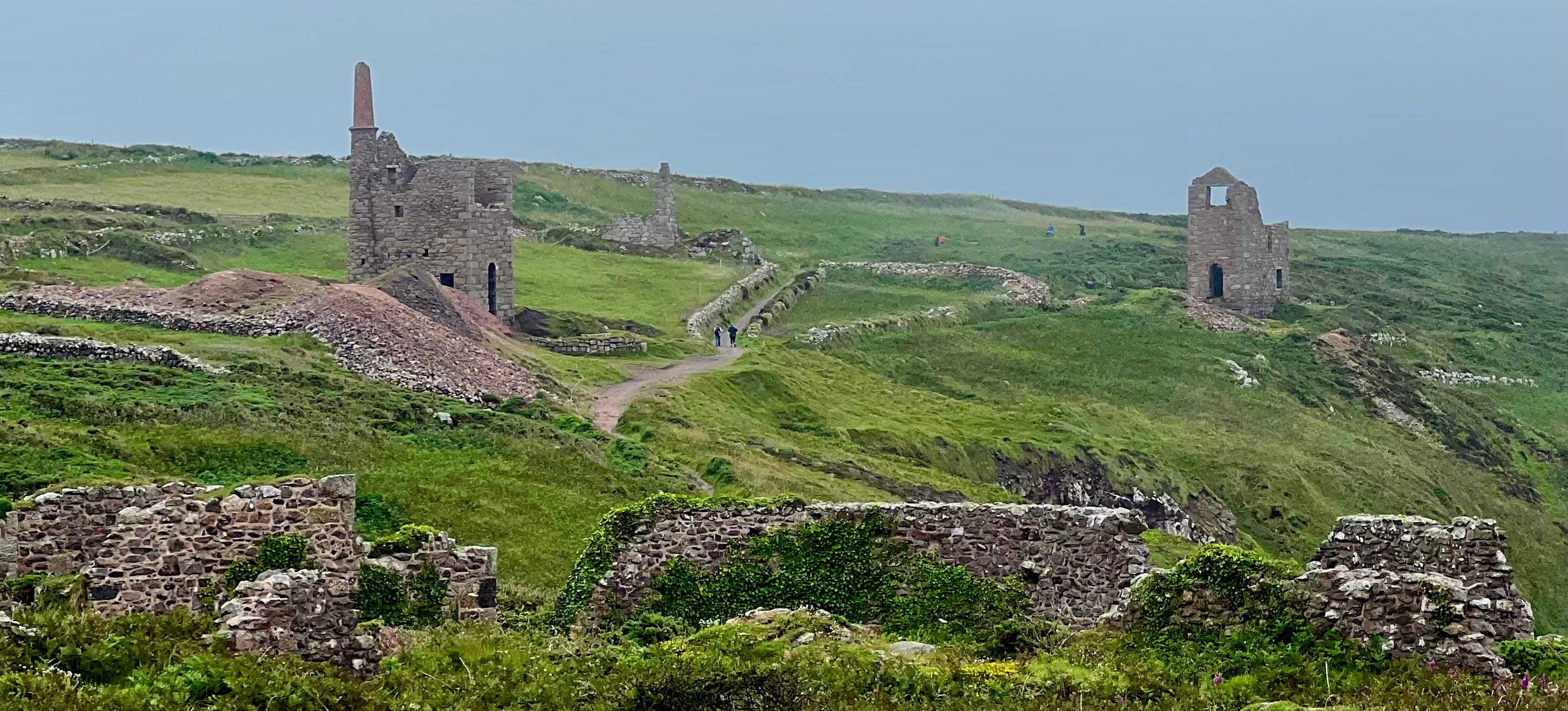
Mining presented problems unlike any other industry. As miners chased ore ever deeper underground, they encountered flooding, poor ventilation, unstable rock, and the challenge of moving people and materials hundreds of feet below the surface. Solving those problems required a special kind of engineer—part inventor, part mechanic, part magician.
Cornwall became one of the great laboratories of the Industrial Revolution. To keep mines from flooding, engineers developed steam engines that transformed mining and helped power the industrial age. Cornish pumping engines became famous around the world, and their influence extended far beyond the mines that inspired them.
Many technologies we now take for granted were refined underground. Hoisting systems lifted miners and ore through deep shafts. Mechanical pumps removed vast quantities of water. Ventilation systems brought fresh air into the workings. Rail tracks moved ore and machinery. Steam power tied everything together. Mining did not invent every one of these technologies, but it pushed them to new levels of sophistication and scale.
Even the modern elevator owes part of its lineage to mining. Long before elevators carried office workers to the fiftieth floor, miners were being raised and lowered through shafts using increasingly sophisticated hoisting systems. When Elisha Otis introduced his famous safety brake in the nineteenth century, he made vertical travel safe enough for buildings to grow upward. The skyscraper, in a sense, has roots underground.
Looking across the engine houses at Botallack, Geevor, and Trewavas, I was reminded that modern industrial society was forged not only in factories and laboratories but also in dark, wet tunnels beneath the earth. The mines were monuments to human ingenuity, persistence, and optimism. Faced with a flooded shaft, the Cornish response was not to give up—it was to build a bigger pump.
Yet these achievements came at a price. The same innovations that allowed miners to dig deeper also exposed them to new dangers. The story of Cornwall’s mines is therefore not only one of engineering triumph. It is also a story of disease, sacrifice, and the long struggle to recognize that progress can carry hidden costs—a lesson that remains as relevant today as it was two centuries ago.
Reading about tin brings back an amazing memory, thanks again Bruce! When I hear tin, I am reminded that bronze is tin+copper. We all know how the Bronze Age emerged after the Stone Age, but where did the tin come from. In an amazing book about the time around 3000 BCE, I discovered that much of the tin that gave Europe the Bronze Age, came from Cornwall!
The copper is less mysterious, it came from an island whose name means copper, Cyprus (think of cuprous oxide to connect the sounds).
Turns out the ancients mined tin in distant Cornwall for millenia and traded it in large boats in huge ingots. Pretty amazing.
As we ponder technology, toxicology, and history, the story of metals looms large. How much of history and mass slaughter were tied to the story of the metals humanity decided defined wealth and power (gold, silver)?
It seems only fitting a great expert on a most poisonous metal, lead, would ask us to plumb these depths (yes, intended)
Happy Father's Day all, to all the Dad's who prove their mettle every day (again, intended).
Bruce: Such a great account of Cornwall's history.
Our tendency as humans (well those rich and powerful anyway) to strip the earth of precious resources, spew out toxic waste, and cause deadly illness in the defenseless poor living nearby continues to this day as we demand more energy (oil) and precious minerals.
E.g. there is obviously a huge environmental price to pay for selling Alberta's Tar Sand oil to other countries.
I testified against Agrium (phosphate mining) in Alberta that was poisoning farms nearby with fluoride pollution from its gypsum ponds. Alberta ignored the harm that fluoride was doing to neighbour farms and permitted expansion of the ponds. Obviously Agrium meant more to Alberta than the health of the farmers living nearby the ponds.
We have become dependent on modern gadgets (smart phones). Now electric vehicles are supposed to take over for internal combustion vehicles. But at what cost to the environment and health of the workers or people living nearby mining plants? Especially the poorest of the workers and neighbours.
This documentary blew my mind. https://www.youtube.com/watch?v=daMiqjqGmNc&t=217s. Once cobalt (which is essential for so many battery-driven gadgets and cars) is ethically removed from the ground it should be indefinitely recycled. But until we get there, EV cars from China where the battery cobalt is African origin, should be banned in Canada as the government promised.
https://www.canada.ca/en/global-affairs/news/2026/06/canada-tables-legislation-to-strengthen-prohibition-on-goods-produced-with-forced-labour.html
I, for one, will not buy an EV until the company can provide certificates that the elements used to make the battery where ethically mined and purified WITHOUT child labour.