


The Shadow of Genius
When Francisco de Goya died in 1828, a series of fourteen murals were discovered on the walls of his farmhouse near Madrid. They were nothing like the court portraits that made him famous. These were private, haunted visions painted in oil directly onto plaster—murky scenes of witches, prisoners, and grotesque gods. Together they became known as Las Pinturas Negras—the Black Paintings.
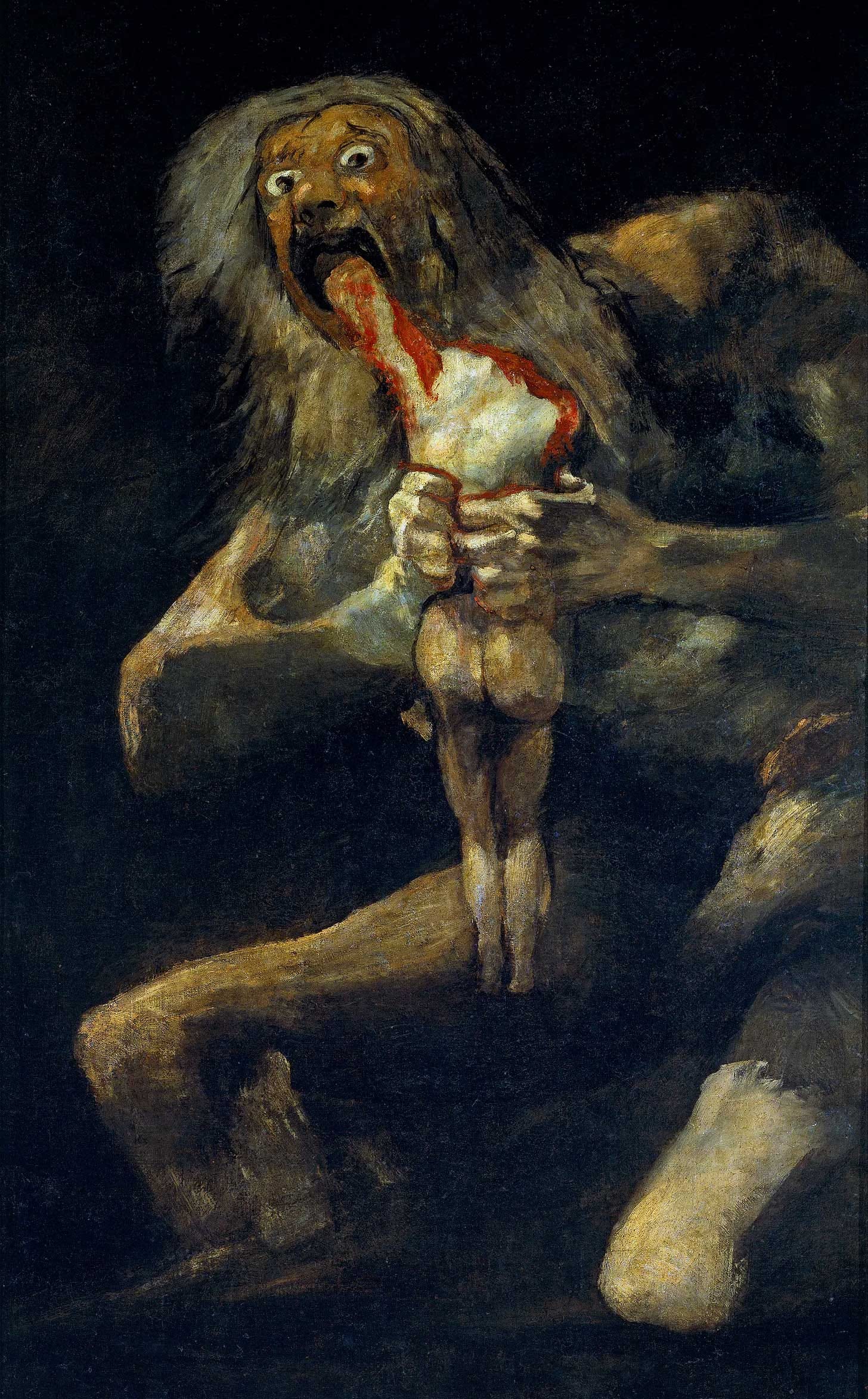
One of them, Saturn Devouring His Son, remains one of the most disturbing images in art. The god looms in darkness, eyes wide and wild, devouring the limp body of his child. Blood drips down his hands. There is no mythic grandeur, only horror.
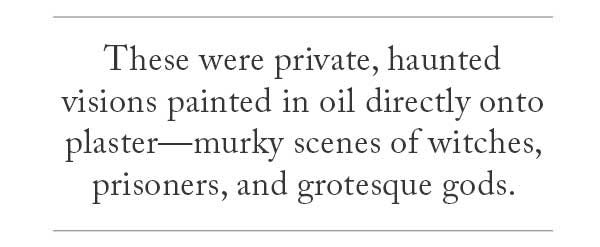
Art critics have long puzzled over this painting. Teresa Vega, an art historian who has led tours at Madrid’s Prado Museum, calls it “not evil, but a kind of shock at his own monstrousness.” She says the paintings “have been overanalyzed,” yet no one can honestly claim, I understand them. Their mystery, she adds, “makes them very appealing—but also very disturbing.”
When I first saw Goya’s Saturn—and later read about his mysterious illness—I saw it through an environmental lens. To me, the painting was not just an allegory of myth or madness. It was an unconscious confession. Goya’s physical decline—his deafness, vertigo, bouts of paralysis, and depression—looked unmistakably like chronic lead poisoning. His art, I realized, was steeped not only in genius, but in the very pigment that was killing him.
The Painter’s Disease
In 1792, at the height of his career as court painter to Charles IV, Goya fell gravely ill. He was bedridden for months with colic, nearly blind, and left permanently deaf. His doctors were baffled. Some called it “nervous disorder.” Others blamed stress. But the symptoms—abdominal colic, tremors, poor balance, confusion, and deafness—read like a textbook case of Saturnism, the occupational disease of painters exposed to lead.
Goya was not alone. Across Europe, the ailment was well known. Bernardino Ramazzini’s Diseases of Workers, printed in 1700, had described colic, trembling, and paralysis among painters. In Paris, physicians spoke of painter’s colic. In Spain, the Enlightenment physician Andrés Piquer warned of “minerales venenosos”—toxic minerals like lead and mercury—in his Física Moderna Racional (1745). By Goya’s lifetime, these dangers were not secrets whispered in laboratories; they were published, debated, and occasionally ignored.
As the chief painter to the Spanish court, Goya worked daily with lead white, vermilion, and cinnabar—pigments prized for their brilliance and permanence. Lead white, or ceruse, was the foundation of nearly every paint on his palette. It gave flesh its glow and skies their light. But it also released invisible dust when ground or mixed, and painters inhaled or ingested it without protection. The result was slow, cumulative poisoning—an erosion of the nervous system that left artists irritable, melancholy, and deaf.
Even apothecaries who supplied pigments knew their dangers. Yet manuals for artists, like Francisco Pacheco’s Arte de la Pintura (1649), praised the beauty of lead white while saying nothing of its hazards. Lead was both muse and murderer.
Saturn’s Curse
What makes Goya’s story especially haunting is how closely the myth of Saturn mirrors his own life. In Greek legend, Cronus—the Titan later called Saturn—was warned that one of his children would overthrow him. Terrified, he swallowed his first five children at birth until his wife, Rhea, tricked him by substituting a stone for their sixth and youngest, Zeus.
In 1773, Goya married Josefa Bayeu, who miscarried 14 times and, of their six children, only one, Javier, survived to adulthood. The others died in infancy. The parallels are eerie: five dead children, one surviving son, and a father tormented by his own destructive power.
Was Goya conscious of the metaphor? Perhaps not at first. But by the early 1800s, as his health deteriorated and his art grew darker, it’s hard to imagine he didn’t see the connection.
Lead was already linked with miscarriages and stillbirths. Ramazzini had written about it a century earlier, and even Greek and Roman physicians knew its effects. Pliny the Elder warned that lead fumes caused paralysis and miscarriage; Dioscorides noted that lead compounds induced abortion—knowledge that persisted, unheeded, through the centuries.
So when Goya painted Saturn Devouring His Son, perhaps he was not only revisiting Rubens’s earlier version of the myth. Perhaps he was confronting a deeper horror: that his own fame and fortune as a painter were built on the very substance that had killed his children and was now consuming him.
The Long Decline
By the time Goya retired to his farmhouse, Quinta del Sordo—the “House of the Deaf Man”—he was nearly seventy and profoundly isolated. His wife was dead, his hearing gone. The cheerful tapestry scenes of his youth had given way to nightmares.
Yet he kept painting, using the same toxic pigments that had sustained and sickened him. On those walls, with brushes dipped in lead white, ochre, and black, he gave form to his inner torment: witches in flight, a dog sinking into sand, Saturn gnawing at his child.
It’s possible he even knew the irony. Lead had once been called the painter’s friend—smooth, pliable, and luminous. But in the end, it was his betrayer. Like Saturn, it devoured its own creation.
The Painter and the Poison
When I study Goya’s Saturn, I see the god’s eyes are not only deranged; they are terrified. The act of devouring is not triumph but remorse. It is the portrait of a man who knows he has destroyed what he loved most.
In the end, Saturn Devouring His Son is not about myth or madness, but recognition. Goya painted what he had come to understand: that creation and destruction can spring from the same hand, that genius and poison often share the same brush.
And people to this day find excuses to assign to other hypothesized causes that which Pb is known to cause, even in the presence of modern diagnostic methods.