
How Rosner and Markowitz Revealed the Hidden Architecture of Disease
How two historians helped reveal the industrial origins of modern disease

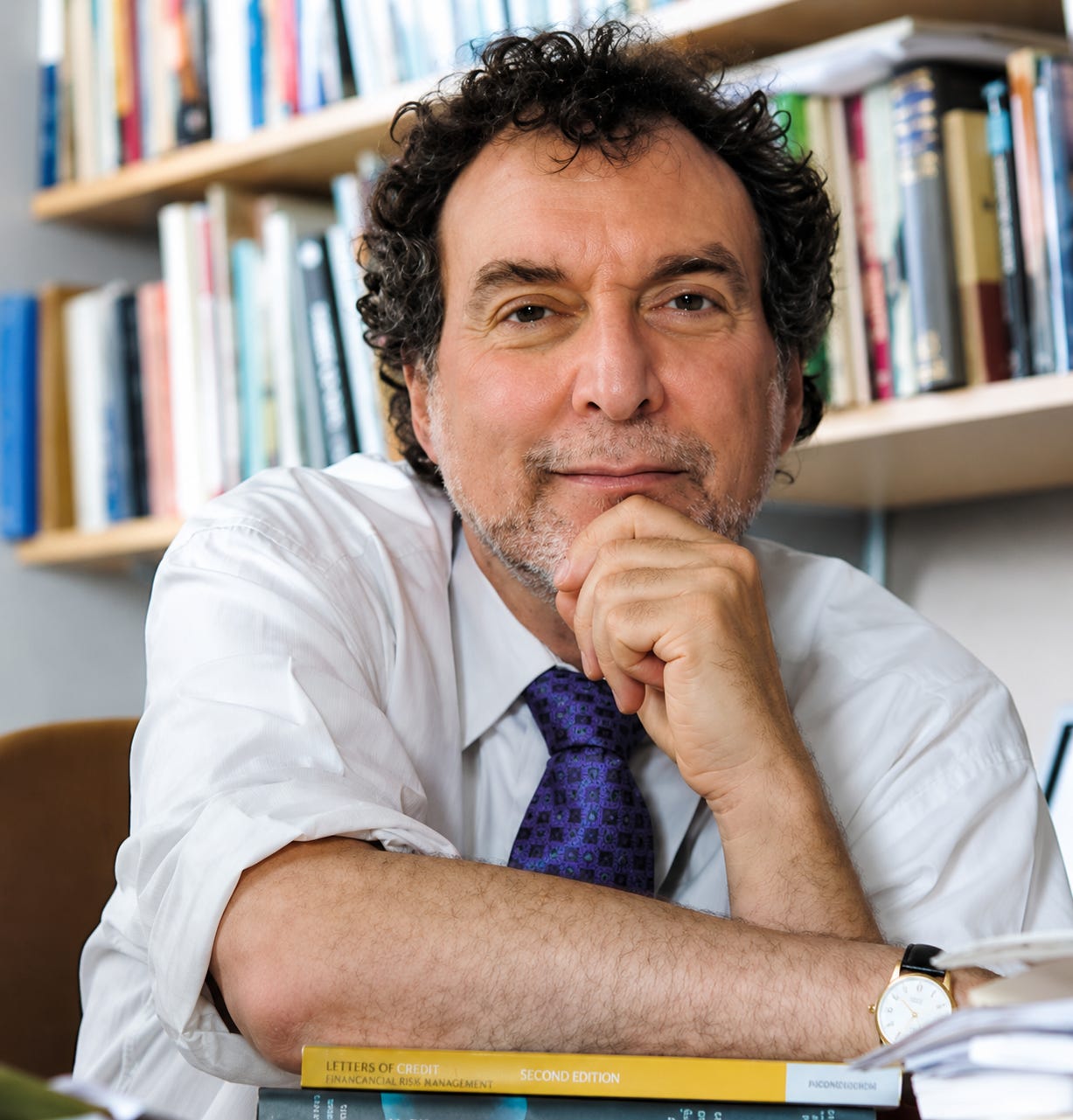
For most of modern history, we treated industrial disease as the unfortunate byproduct of progress. David Rosner (1947-2026) spent his career showing that many of these harms were neither accidental nor unforeseeable.
David Rosner and Gerald Markowitz did not simply write history. Together, they changed how many of us understand the relationship between industry, disease, science, and public health. Their work became so intertwined that it is difficult to think of one without the other. Yet David’s death this past week invites reflection not only on their partnership, but on the singular role he played in reshaping public health history.
I had the opportunity and privilege to work with David and Jerry—they were a package deal—in the Rhode Island and California public nuisance cases against the paint and pigment manufacturers. Watching them work was to see historians operating not as distant chroniclers of the past, but as investigators reconstructing how societies normalize harm. They brought archives to life. Internal memos, trade association minutes, and forgotten correspondence became evidence not only of what industries knew, but of how uncertainty itself was cultivated and deployed.
More broadly, Rosner and Markowitz helped redefine what public health history could be.
Rosner and Markowitz stood at the intersection of history and public health. They understood that disease does not emerge in a vacuum. It arises from the worlds we build—our industries, our housing, our labor systems, our politics, and our willingness to accept certain harms as the price of progress.
Their work on lead poisoning fundamentally reshaped the public conversation. Lead was long portrayed as an unfortunate but isolated problem affecting poor children in deteriorating housing. Rosner and Markowitz showed something much larger and more unsettling: lead poisoning was not an accident. It was the foreseeable consequence of industrial decisions, aggressive marketing, political compromise, and delayed regulation. Their landmark work, Deceit and Denial, documented how industries understood the dangers of lead long before the public did and how scientific uncertainty was often amplified to delay action.
The same themes ran through their work on silica and vinyl chloride. They chronicled how workers developed silicosis, cancer, and other occupational diseases while industries debated standards, questioned evidence, and insisted more study was needed. They showed that uncertainty was not merely a scientific condition; it was a political strategy.
Rosner and Markowitz read corporate archives the way epidemiologists read outbreaks: searching for patterns, timelines, concealment, and consequence. They reconstructed not only what companies knew, but when they knew it and how they responded. In doing so, they helped expose a recurring pattern in public health: the long gap between recognition of harm and willingness to act.
Their work did not remain confined to universities or academic journals. It entered courtrooms, regulatory debates, and public policy battles, where it was often intensely contested precisely because it challenged powerful industries and long-standing assumptions about responsibility for disease.
They also understood something profound about modern disease. Many of the illnesses surrounding us are not sudden catastrophes. They accumulate slowly across decades, hidden within the ordinary routines of industrial life. Lead in paint and gasoline. Silica in mines and factories. Vinyl chloride in plastics manufacturing. These were not exotic hazards. They were woven into modernity itself.
That insight feels even more relevant today. We increasingly inhabit a world saturated with synthetic chemicals, pollutants, and technologies introduced long before their long-term effects are fully understood. Rosner and Markowitz’s work forced us to confront an uncomfortable possibility: we are, in part, dying from the world we built.
Yet David was never merely cynical. His work carried a moral seriousness without drifting into self-righteousness. He believed history mattered because it illuminated choices—choices made differently in the future if we were willing to learn from the past.
Many scholars write about public health. David Rosner helped reveal its deeper architecture: the political decisions, economic incentives, institutional hesitations, and cultural assumptions that shape who becomes sick and who is protected.
That is an extraordinary legacy.
Thank you for this tribute. I am also saddened to learn of David’s death. His work gave a permission structure to others to investigate and openly take on industrially caused disease. He was my dissertation advisor and was unfailingly kind, supportive, encouraging and enthusiastic. He worked tirelessly to help marginalized workers and children who had been harmed by occupational and environmental exposures. His dedication and moral clarity was inspiring.
Bruce,
Thank you for your inspiring reflection on David Rosner's legacy which, like the head and tail of a coin, is unique to him and inseparable from that of Jerry Markowitz.
I never met David. But since the publication of "Deceit and Denial" in 2002 and their stirring interviews with Bill Moyers, David and Jerry have helped immensely to shape my teaching of "Chemistry and Sustainability" at Carnegie Mellon University.
The lead component of D&D has been read and analyzed in considerable depth by hundreds of students here. It is a fantastic privilege to observe the indelible imprint it leaves on brilliant students.
You captured D&D perfectly: "Rosner and Markowitz’s work forced us to confront an uncomfortable possibility: we are, in part, dying from the world we built."
Thank you David! Thank you Jerry!
And thank you again Bruce!
Terry Collins